What is agent readiness?
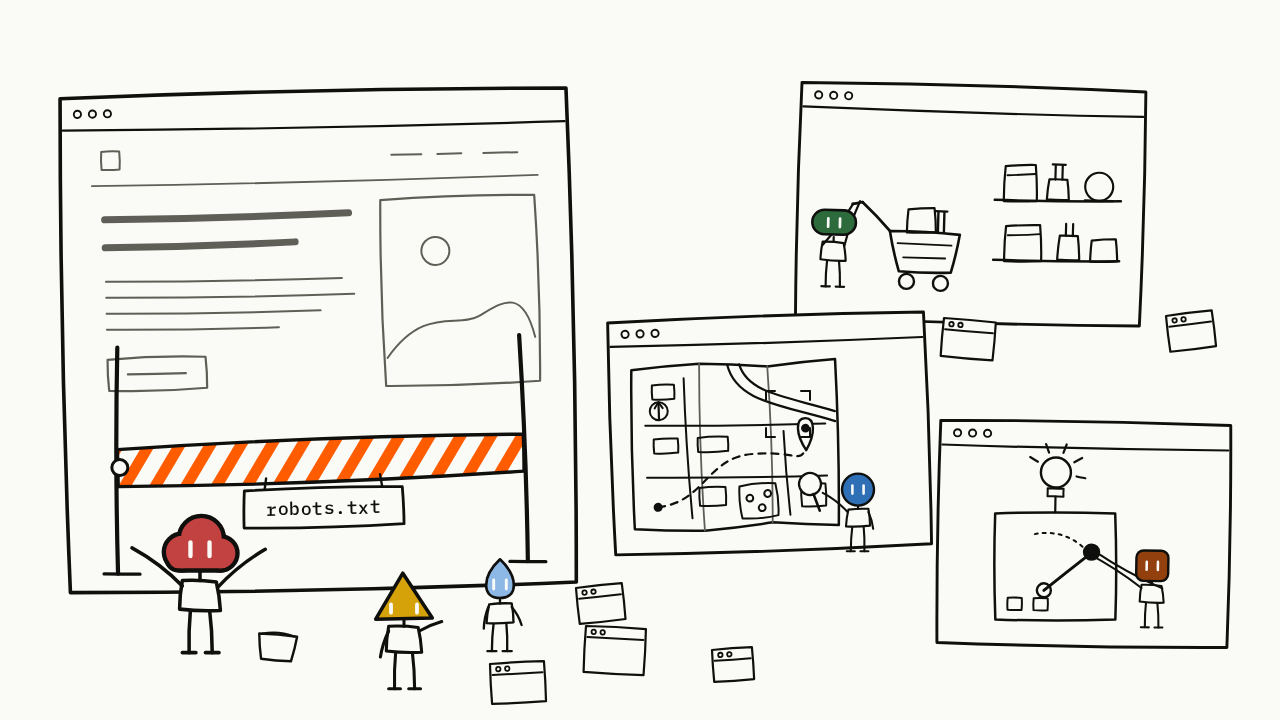
Agent readiness is whether an AI agent can find, understand, and use the published information it needs to research, buy, or use a product or service online, without a human filling the gaps.
That published information lives on several surfaces: websites, public product pages, docs, machine interfaces, commerce and trust rails, and how an organization runs agents. The phrase "agent readiness" is used in more than one way across the industry. Start with what "ready" means on a published page, then what HonestClaw measures, then the other kinds of readiness people talk about.
Find, understand, and use
On a published surface, "ready" means an agent can do three jobs with the words and files you already publish.
Find means the agent can tell what this product or service is and what is offered. The homepage or product page states the offer in plain text the first response can read.
Understand means the agent can turn what it found into stable facts from the published surface. Pricing, plans, and limits need to appear in readable HTML or linked docs rather than only behind a click or a chart image. That readiness side of agent comprehension matters because if the page is unclear, agents guess or miss the offer. Answer engines can still cite a page while an acting agent misreads the same offer. Getting cited vs agent-ready covers that citation gap.
Use means the next how-to material is published and readable so the agent is not stuck waiting for a person. Docs, OpenAPI or similar contracts, and MCP or CLI entry points that describe the next step count here. PublishedAPI catalogs are one way agents discover those contracts. On published surfaces this check stays observational: we check whether those materials are published and readable. We do not claim a live agent finished a product task.
Worked example (software plans). Find: a homepage states "Team plan, $29 per seat / month" in plain HTML. Understand: a pricing page lists seats, limits, and overage rules in readable text (not only inside a chart image). Use: docs link an OpenAPI file or MCP entry that describes how to create a project. An agent that only gets a JS shell with no seat price fails Find and Understand on that surface.
We observe published surfaces only. Scans stay logged out.
What HonestClaw measures today (ARS)
ARS means Agent Readiness Score. It is HonestClaw's 0 to 100 observational score for one scan of a published website or public product surface.
A higher ARS means that published site or public product surface is more optimized for agent comprehension and observability: agents can find, understand, and use what you publish with less guesswork when they research, buy, or use products and services online.
ARS is observational on published surfaces only. Machine-interface driveability, commerce or trust protocols, org adoption, product reviews, safety ratings, codebase grades, rankings, and live-task success rates sit outside ARS. We do not sell scores, reviews, or placement.
Types of agent readiness
People also use "agent readiness" to mean other things that are related parts of the core concept of agent readiness:
| Type | What "ready" usually means |
|---|---|
| Published web | An agent can find, fetch, and parse public pages (marketing, blogs, docs HTML). |
| Public product surfaces | An agent can find, understand, and use product marketing, pricing, and public docs reachable without app login. |
| Machine interfaces | Published APIs, MCP servers, CLIs, and similar contracts an agent can discover and call from docs or catalogs. |
| Commerce and trust rails | Payments, agent recognition, and related protocols between agents and merchants. |
| Org and governance | Whether a company can design, deploy, and govern agents at scale. |
ARS covers the published-web and public-product types only. The other three types stay in the table so the phrase stays honest; they are outside what ARS scores today.
These five types often overlap on the same company site. Website and public product surfaces often share a domain, so the same published HTML can cover marketing pages and product pages that do not require a login. Those two types still stay different things to measure when you make a claim.
Machine interfaces usually become reachable through documentation on that website: API docs, OpenAPI catalogs, MCP descriptions, CLI help, and ARD (agentic resource discovery) (a way to publish what agents can call) tell an agent how to discover and call contracts even when the call itself happens off the brochure pages. Peer protocols such asA2A (Agent2Agent) belong with machine interfaces too: agents use A2A to talk to other agents. ARS may see that those contracts are published and readable; ARS does not exercise the API or MCP call itself.
Commerce and trust rails include payment and recognition protocols such asOpenAI and Stripe's Agentic Commerce Protocol (ACP),Google's Agent Payments Protocol (AP2), x402, andVisa's Trusted Agent Protocol. Those protocols are named here as examples of the commerce type, not as ARS checks. They are different things to measure from a public HTML page, and they sit outside what a published-surface scan observes. The agent economy page maps that commerce side in more depth.
Org and governance means whether a company can design, deploy, and govern agents at scale (roles, review, policy). That type is real agent readiness talk in the industry. It is not something a published-page scan measures, so it stays outside ARS.
Website agent readiness
Website agent readiness means an agent can find, understand, and usepublic web pages: marketing pages, blogs, docs sites, and other crawlable HTML.
Example: a pricing page that hides the seat price behind a "compare plans" click. A person clicks through and sees the price. An agent that only gets the first HTML response may never see the seat price.
A robots.txt rule that blocks crawlers can stop an agent before it ever sees the page. Serving the offer only through JavaScript that never appears as crawlable HTML for agents is the same class of barrier: the agent gets an empty or partial first response. Lab probes in aVercel agent-readability study (1,033 agent runs across 25 sites, plus 190 controlled fetch probes across 19 configs) found the same fetch pattern: when the answer lives only in JavaScript, a fetch-only client fails; a 403 blocks both clients. Those lab results describe fetch barriers. They are not ARS scores.
Product agent readiness
Product agent readiness means an agent can find, understand, and usepublic product surfaces: product marketing, pricing, public docs, and other product pages reachable without logging into the app.
Website and product often share a domain, so name which surface you mean when you claim readiness.
Calling an API from a machine contract is a different question. That question belongs to the machine-interface type, not to public product readiness.
When website and product surfaces overlap
| Case | What converges or diverges |
|---|---|
| Web app on the same domain | Website and public product surfaces largely converge. Name which surface a claim is about. |
| Marketing site + installable or separate API product | They diverge. Website readiness covers the public pages. Public product readiness covers product pages and docs without app login, not the brochure alone. |
| Docs as bridge | API docs, OpenAPI, MCP, CLI, and ARD often live on the website and tell an agent how to use machine interfaces even when use happens off the brochure pages. |
These three cases keep website and product claims honest. Same domain does not always mean the same readiness claim. Docs on the website often bridge to machine interfaces even when the call itself happens off the brochure pages.
How others use the phrase
Peers name different types of agent readiness. Each peer covers part of the idea; none of those peer scores is ARS.
- Cloudflare's Agent Readiness score: protocol and checklist discoverability on a domain (published-web / protocol type).Cloudflare AEO is related and distinct.
- Kin Lane's Agent Readiness Score: API driveability (machine-interface type).
- Microsoft's Agent Readiness Framework: org adoption and governance.
- OpenAI and Stripe's Agentic Commerce Protocol (ACP),Google's AP2, x402, andVisa's Trusted Agent Protocol: commerce and trust rails.
Get your company agent-ready
"Agent readiness" gives teams a shared vocabulary for whether agents can find, understand, and use published surfaces when they research, buy, or use products and services online. Without those three jobs on what you publish, research and purchase work stalls even when marketing gets you noticed. ARS is one observational score for a single published website or public product surface.
There's a good chance AI agents will become the world's leading researchers, users, and buyers of software and products. Make sure you're ready for that future.
How we build the ARS score is on the methodology page.
You can run a free scan on a published URL.